
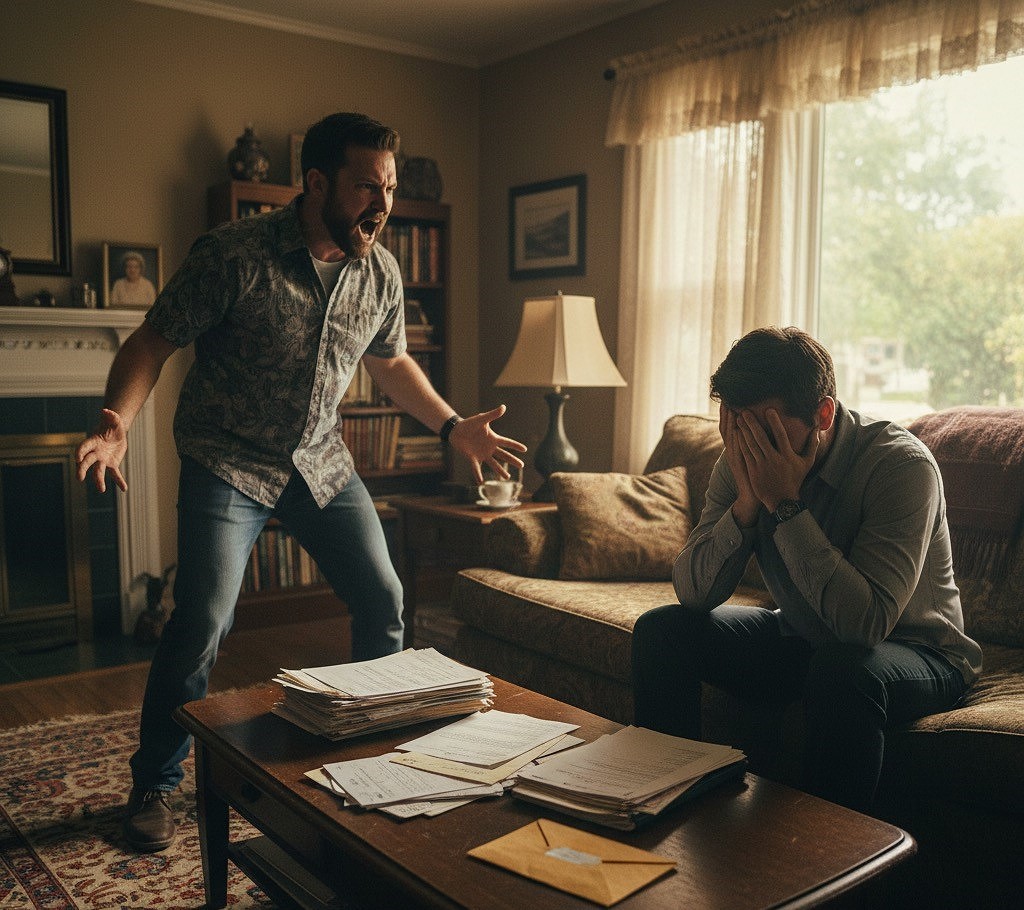
I never thought I’d have to share how my brother sued for inheritance, but after what happened with my mother’s house, I can’t stay silent. My mother, bless her heart, always knew…
My mother, bless her heart, always knew. She knew my brother Mark was built with an avarice I could only describe as industrial. But knowing it and having proof are two different things.
When Mom passed away six months ago, the inheritance wasn’t complicated. She left her small, 1950s suburban home—the house we grew up in, the house that smells like cinnamon and old paperbacks—to me and Mark, 50/50. I wanted to keep it. I wanted to use my half to turn it into a rental property or simply keep it as a sacred place.
Mark, however, saw only dollar signs.
“We sell immediately,” he stated at the funeral lunch, barely an hour after the eulogy. “I need the capital for the third attempt at my crypto startup.”
I flat-out refused. The market was slow, and the house meant more than money. That’s when the threats began. He froze the bank account. At first, I thought we could find a compromise, but things escalated quickly when my brother sued for inheritance to force a sale of the only place I called home.
The Real Reason My Brother Sued for Inheritance
The lawsuit dragged on for four agonizing months. It was brutal. Mark painted me as the sentimental fool holding back his “genius entrepreneurship.” I used my meager savings to hire a decent property lawyer, Ms. Helena Vance.
The entire family watched, aghast. Mark was the prodigal son who always came home empty-handed; I was the steady one. But in court, none of that mattered. It was about legal precedent. And Mark’s lawyer was aggressive. On the final day, I truly thought I had lost. The judge looked exhausted. Mark was already smiling, whispering to his lawyer about booking a realtor.
Then, Ms. Vance stood up for the final rebuttal. She didn’t argue the value of the house. She simply cited an obscure clause written deep within Mom’s will, a contingency written 15 years ago, right after Dad passed.
“Your Honor, this clause states that if either inheritor initiates legal action to force a sale within the first five years, their share of the property is immediately reduced to 10% of the sale price, and the remaining 90% goes to the other sibling. It was clearly marked as a protective measure against ‘undue financial distress.’”
Watching him in that courtroom was surreal. It was hard to believe my own brother sued for inheritance just to fund his failed crypto startups, showing no respect for our mother’s wishes.
The room went silent. Mark’s face went white. The judge looked at the clause, nodded slowly, and ruled: The lawsuit fails. The house remains with me, and Mark, having triggered the clause, is entitled to 10% of its estimated value, payable by me, or nothing.
Mark screamed. He was dragged out by security. It was a victory, but a hollow, exhausting one.
The Envelope
As I stood there, reeling, Ms. Vance asked me to sit down. She opened her briefcase and pulled out a plain, yellowed envelope sealed with my mother’s elegant handwriting.
“Your mother instructed me to give you this immediately after the court ruling, regardless of the outcome,” she said quietly. “She said you deserved to know the full reason why she wrote that protective clause.”
My hands were shaking as I tore the envelope open. Inside was a single, typed letter from my mother.
She started by saying how much she loved both of us. But the middle paragraph hit me like a physical blow:
“My dearest child, Mark is not your father’s son. His biological father was a man I briefly knew before I met your wonderful father. Mark never knew this truth. Your father adopted him and loved him fiercely, never breathing a word of it. I wrote that clause because Mark’s father was a man consumed by greed, and I always feared that legacy would surface. I had to protect you, and Dad’s house, from a desperation that was inherited, not taught.”
The secret my mother left behind changed everything, but it still leaves a bitter taste that my brother sued for inheritance instead of simply talking to me like family.
I dropped the paper. All the years of Mark’s demands, his anger, his neediness—they weren’t just selfishness. They were rooted in a secret, a legacy he never knew he carried.
I kept the house. I paid Mark the 10%, which he took, despite everything. He still doesn’t know the truth in that envelope. I locked it away.
Am I the monster for letting him remain ignorant, or did my mother’s final act of protection save what was left of our family’s legacy?